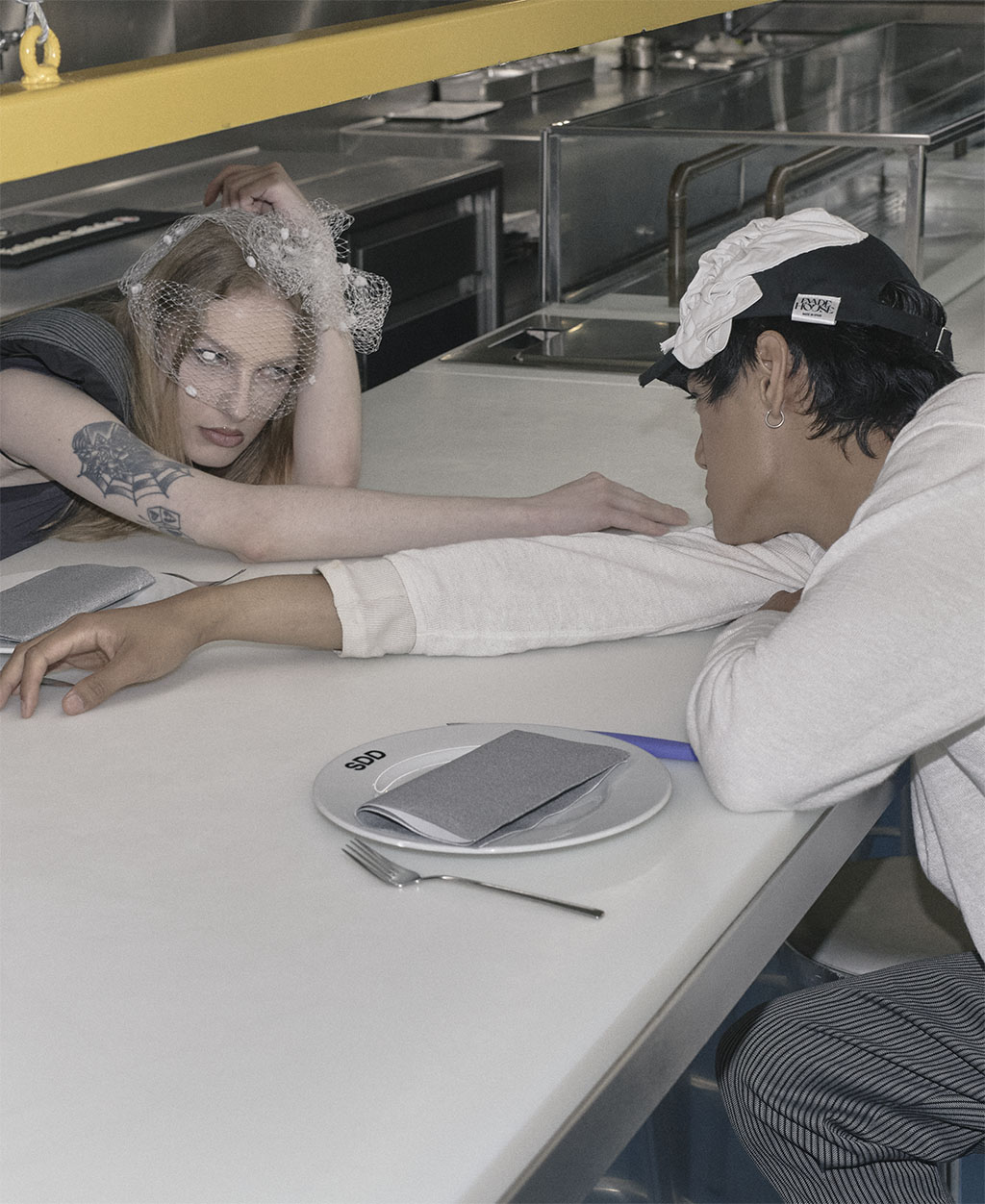
EVADE: Designing for Our Future Ancestors
A Conversation With Evade House’s, Evangelina Julia
By Sebastián Sturla
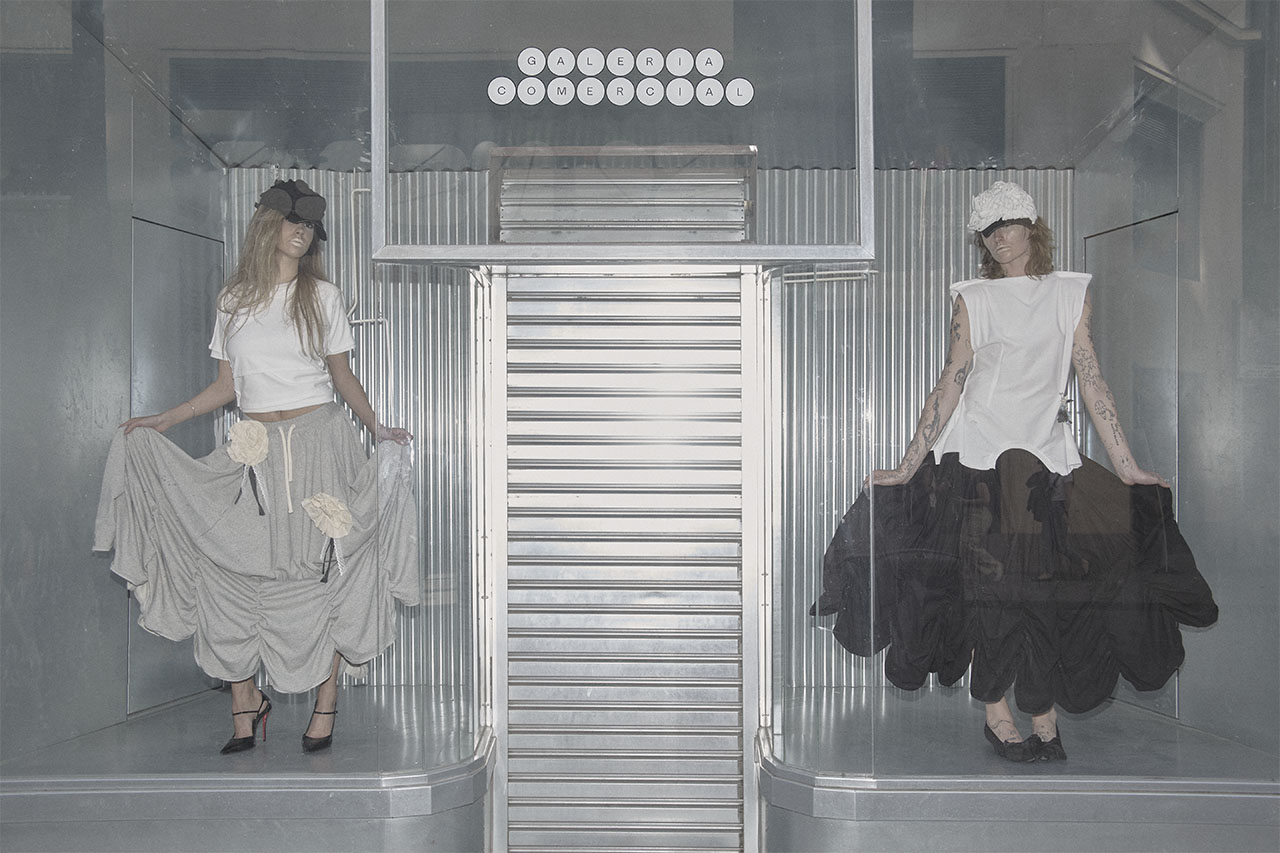
This April, I had the pleasure of speaking with Evangelina Julia, designer and founder of the fashion label Evade House. The brand has received widespread recognition for its distinctive silhouettes, material choices, and focus on the relationship between garment and owner. Recently, it has been sported by big names the likes of Charli XCX and Caroline Polachek, and achieved a finalist position in Vogue Spain’s 2026 Fashion Fund.
We met at Julia’s Madrid studio. Located in Usera, the Spanish capital’s informal Chinatown district, the studio is a continuation of the neighborhood’s lively, somewhat disheveled atmosphere. Behind an industrial garage door, the tight, advertisement-lined streets bleed into a maze of winding hallways. Interns, students, and assistants run around the expansive warehouse-like estate transporting fabric, sewing garments together, and reviewing finished pieces.
Stepping into Evade House’s environment of creation put all the hype into context. Nothing about the label is corporate. The authenticity of their slow-production model goes far beyond a brand image, acting more as a work ethic than a marketing tactic.
The following is an excerpt from my conversation with Evangelina Julia on accessibility in fashion, sustainability, and how she plans to stay true to her mission amid all the new attention. The full conversation appears exclusively in TUNICA Magazine Volume X: Total Freedom.
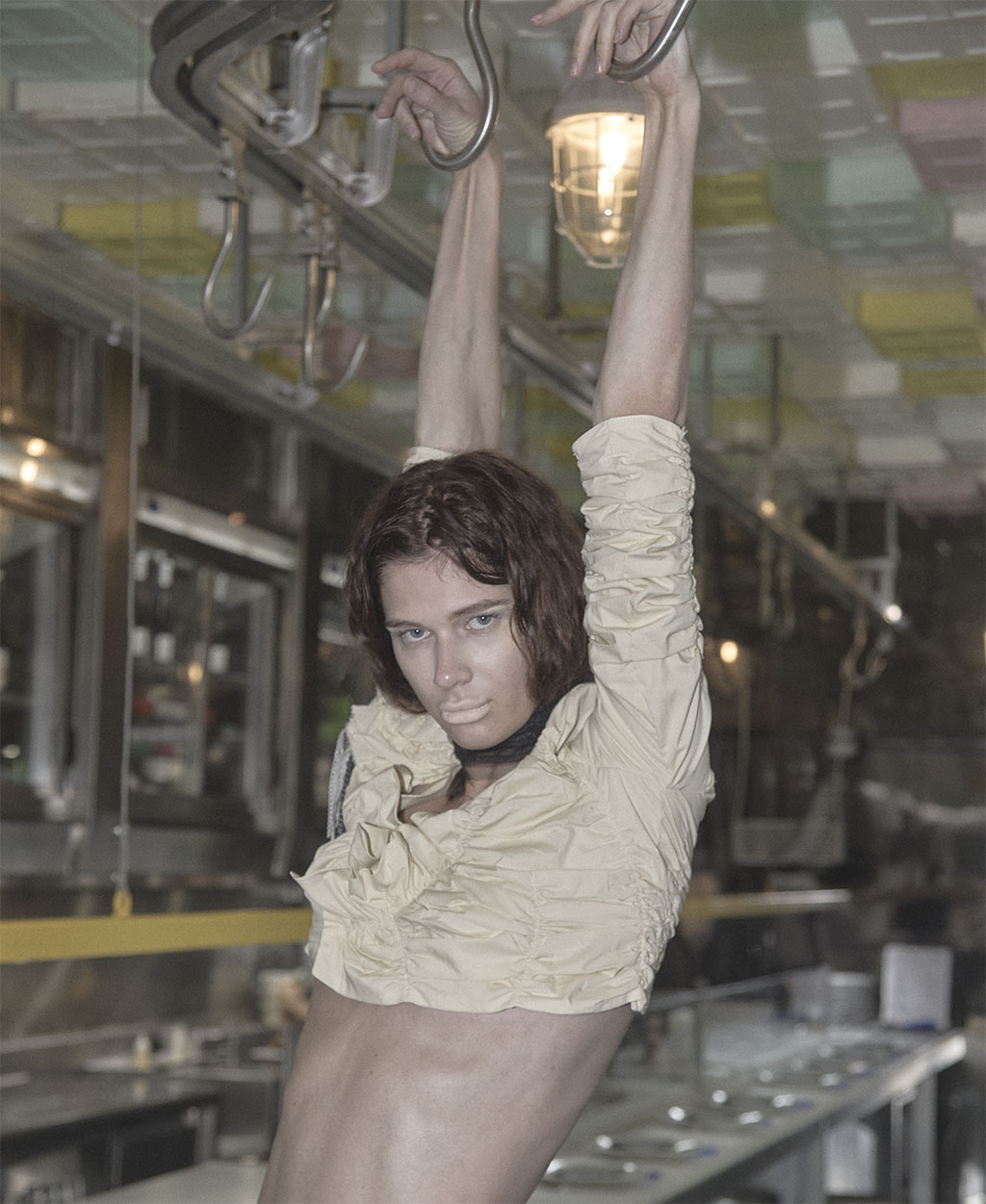
Evangelina, before Evade became a label, it felt like it started as a way of observing materials differently… Was there a specific object, memory, or frustration that made you realize fashion could become your medium?
What made me realize fashion could become my medium was understanding how many different ways a material, and also a silhouette or garment, could transform depending on who wore it, damaged it, preserved it, or projected memory onto it. I became obsessed with the idea that clothing is never static. A garment can completely change meaning through time, emotion, use, or context.
But it was also about behavior. I started noticing how clothing modifies not only the image of a person, but the way they move, act, or even exist socially. A hoodie creates a different posture and energy than a tailored jacket. A monk’s robe immediately communicates something spiritual or disciplined, but if you remove the robe, would we still perceive that identity in the same way?
That ambiguity fascinated me - the mysterious relationship between clothing and human psychology: how garments can soften the body, restrict it, sensualize it, or completely alter someone’s presence. The body behaves differently depending on the architecture it inhabits.
I also remember being deeply affected by old garments that carried traces of previous lives (stains, deformations, repairs, smells, folds). They felt more alive to me than something perfectly new…it was a frustration with how disconnected clothing had become from memory, from the body, and from human experience. I realized I wasn’t interested in fashion purely as a trend or spectacle, but as a medium capable of holding emotion, absence, intimacy, transformation, and even identity itself.
Your first collection was called Travelling Blind. Looking back, do that title and the behaviors it suggests (overlooking age, gender, with a focus on material) still define your practice today?
Absolutely. I think Travelling Blind still defines my practice very deeply, although today I understand the title in a much broader and more intuitive way.
At the beginning, it was connected to accessibility and questioning why fashion depends so heavily on visual authority. I was interested in what happens when clothing is experienced beyond the eye. That naturally led me to overlook categories like age or gender, because I became much more interested in sensation and material presence than identity segmentation.
But over time, Travelling Blind also became a way of approaching the creative process itself. For me, it means never becoming too attached to a fixed outcome, a material, a sensation, or even a concept before allowing it to fully develop.
In that sense, “travelling blind” is about trusting uncertainty and remaining porous to discovery. I think a lot of contemporary systems try to control creativity too early. I’m more interested in allowing things to reveal themselves naturally through process and contact.
Continuing on this, your early work explored clothing for visually impaired wearers, including braille labels and reversible garments. Why was accessibility important before appealing to a larger, commercial audience?
Accessibility was important to me before commercial appeal because it allowed me to question the hierarchy through which fashion usually operates. Fashion often assumes that seeing is the primary way of understanding a garment/fashion, but I’ve always felt that clothing is experienced in a much more complex way.
Working with braille labels or reversible garments was not only about functionality. It was about asking what happens when the eye stops being the only authority. I became very interested in tactility and in the idea that clothing could be understood through physical and emotional interaction rather than pure image.
At that moment, I wasn’t thinking strategically about a larger audience. I was more interested in exploring how garments could adapt, transform, and communicate differently depending on who was wearing them.
Accessibility also brought me closer to the body itself. It forced me to think less about spectacle and more about sensation, intimacy, orientation, and presence.
Could accessibility become the next frontier of luxury?
Yes, but only if luxury is redefined.
If luxury continues to mean exclusivity, distance, or status, then accessibility will always appear contradictory to it. But if luxury begins to mean attention, sensitivity, care, and a deeper understanding of human experience, then accessibility could become one of its most sophisticated forms.
To design accessibly requires a different level of listening. It forces you to think about bodies not as standardized ideals, but as diverse realities with different ways of perceiving, moving, and interacting with the world. That kind of consideration is incredibly complex and, in my opinion, deeply luxurious.
I think contemporary luxury has become too dependent on image and recognition. Accessibility introduces another value system. It asks fashion to move beyond spectacle and into genuine human connection. In many ways, I think the future of luxury will not be about owning more things, but about feeling more considered by the things we own.
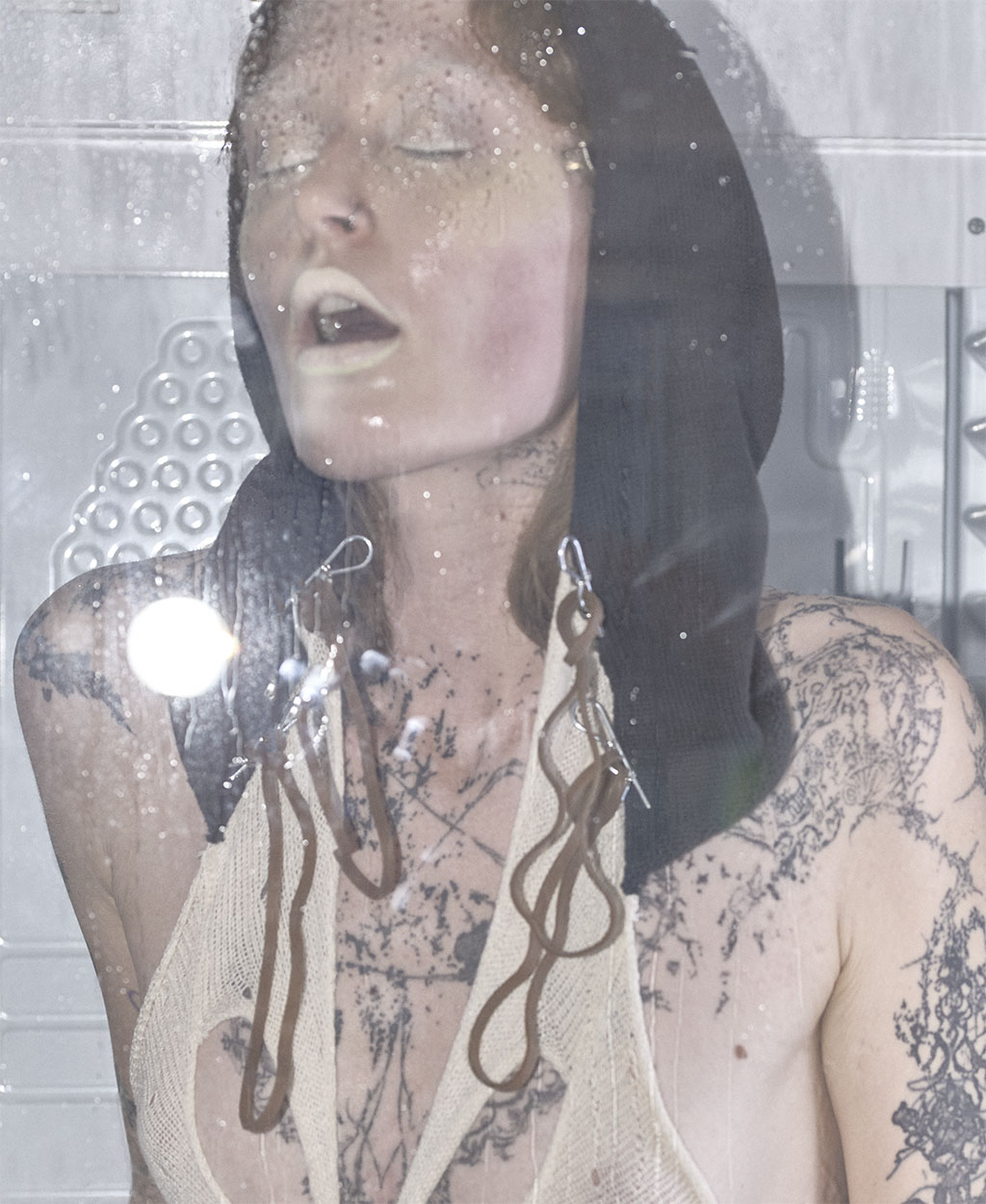
You work with wine, salt, algae, microorganisms, hemp, felt... Do you ever feel like material stops being “fabric” and starts becoming a collaborator? In other words, how do your material choices influence your final designs? Further, how much authorship are you willing to surrender?
Yes, completely. I think there is a moment where material stops behaving as something passive and begins almost negotiating with you.
Wine stains unpredictably. Salt crystallizes differently depending on humidity and time. Felt compresses and reacts through pressure and friction. These materials are alive in a certain sense; they resist control. I often feel like I’m entering into dialogue with them. That dialogue changes the final design completely.
I think contemporary fashion often tries to dominate material completely, to make it obedient. But I’m more interested in allowing uncertainty to exist within the garment. I like when the process leaves traces because of that, I’m actually willing to surrender quite a lot of authorship. Not in the sense of disappearing as a designer, but in accepting that creation does not belong entirely to me. The body influences the garment, time influences it, the material influences it, memory influences it.
I see design less as control and more as creating the conditions for something to emerge. Sometimes the most interesting part of a piece is precisely the part I could never have fully predicted.
Many designers chase innovation through technology, but your work often looks backward to ancestral processes. Do you see tradition as innovative, or even a form of resistance?
100%. History behaves more like a circle than a straight line. We are constantly looking into the past in order to imagine the future, so in many ways it feels inevitable that certain ancestral processes can appear more futuristic than contemporary systems themselves.
Sometimes the future becomes obsessed with speed, optimization, and control, while older techniques contain something much more advanced emotionally and materially: patience - repair. For me, tradition is not nostalgic. What interests me is understanding the intelligence hidden inside these processes and allowing them to enter contemporary conversations differently.
I think ancestral techniques carry a kind of slowness and intimacy that modern production has almost erased. Felting, weaving, dyeing, repairing are not primitive gestures. They are systems of attention developed through generations of physical dialogue with material.
In that sense, tradition can absolutely become a form of resistance. Resistance against the idea that innovation only exists through technology or constant novelty. Sometimes preserving a technique with material is more radical than inventing something entirely new. To preserve something today already means refusing disappearance.
You’ve said garments carry memory. In what ways do you think materials remember more honestly than people across generations? Or, conversely, do people remember more honestly than material?
I think people and materials remember differently, and that difference is what interests me. People remember through narrative. We reinterpret, romanticize, repress, exaggerate, forget. Human memory is emotional and unstable; it changes depending on who we become.
Material, on the other hand, remembers physically. They are simply carrying evidence of time. In that sense, materials can sometimes feel more honest because they do not consciously perform memory. They just absorb consequence.
A garment records aging. It becomes almost like an unconscious archive of the body. But at the same time, material alone is silent. It still needs human projection in order to become meaningful. Two people can inherit the exact same garment and remember completely different things through it.
That tension fascinates me: the space between physical trace and emotional interpretation. I think garments exist exactly there. They become containers where material memory and human memory continuously negotiate with each other across generations. Maybe that’s why old clothing can feel so powerful.
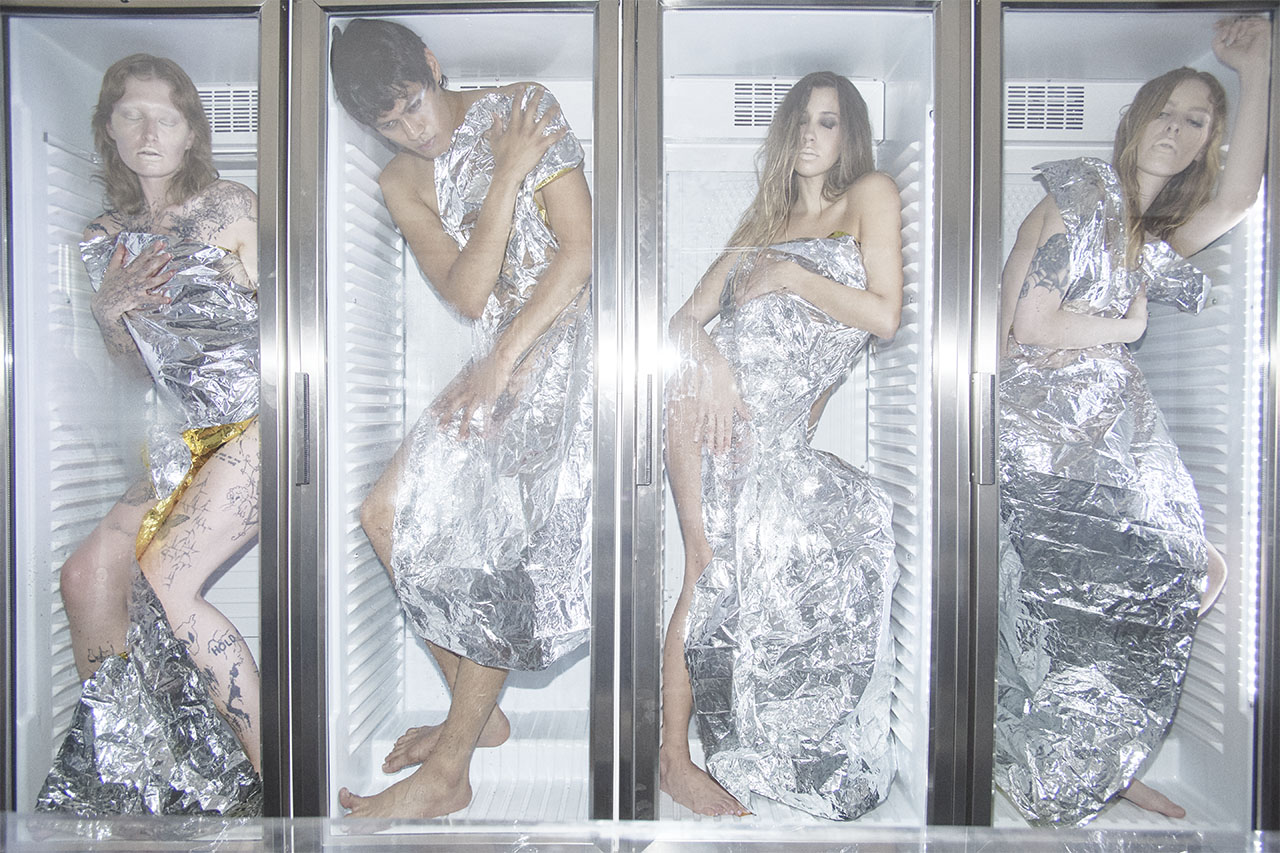
Sustainability is often communicated through numbers, certifications, and supply chains. Your work communicates it through emotion and storytelling. Is that intentional?
Yes, very intentionally. I respect the importance of certifications, supply chains, and measurable systems, because they are necessary forms of accountability. But I also think sustainability cannot be only technical information.
Numbers can inform people, but they do not always create emotional transformation. What interests me is emotional durability. Why do certain objects stay with us for years while others are immediately discarded? Often, it has less to do with efficiency and more to do with attachment, memory, intimacy, or meaning.
One of the biggest problems in contemporary consumption is emotional disconnection. We have learned to consume objects without building relationships with them. So for me, storytelling is not decoration around sustainability; it is part of sustainability itself.
If a garment carries memory, if it feels personal, if it contains narrative or emotional weight, people are more likely to keep it and pass it on. That changes the lifespan of the object completely. I’m interested in sustainability not only as material preservation, but also as psychological preservation.
Do you think the fashion industry has made sustainability too clean, too polished? Have we become detached from the inherent “messiness” of life?
Yes, I think in many ways sustainability has been aestheticized into something extremely polished, almost sterile. But life itself is not sterile. Nature is not sterile. Bodies are not sterile. We sweat, stain, age, tear, repair, decay, transform. Materials absorb humidity, pressure, friction…There is a kind of violence in trying to erase all traces of that reality in order to create a more marketable image of sustainability.
Sustainability today feels too visually optimized: neutral palettes, perfect packaging, smooth narratives of “ethical consumption.” But real transformation is messy. Compost is messy. Repair is messy. Reuse is messy. Emotional attachment is messy. Even healing is messy.
We want objects to appear untouched, even though life itself is built through erosion and change. That’s partly why I’m drawn to stains, asymmetry, imperfect textures, or materials that visibly evolve through time. They remind us that existence leaves traces. For me, sustainability should not feel like the elimination of life’s messiness, but rather a deeper reconciliation with it.
Can sustainability still be radical, or has it become another aesthetic?
It can still be radical, but only if we are honest about its contradictions. The most sustainable radical thing would be to stop producing completely, so fashion will always exist within a tension. For me, sustainability is not an aesthetic or a marketing label; it’s a way of thinking and behaving. That’s why I think greenwashing begins when brands perform sustainability superficially instead of integrating it structurally.
I also think we need to redefine the language around sustainability. Using organic cotton in one garment does not automatically make a brand sustainable. Transparency is more important than purity. Sometimes, a project using synthetic materials but produced locally, slowly, and within a real community can be more honest than a brand selling an image of perfection. I don’t believe sustainability is a pure state - it’s an ongoing negotiation between responsibility, material, labor, desire, and awareness.
Stains, tears, erosion, asymmetry…elements many brands would classify as flaws become luxury in your universe. What does perfection mean to you now?
Perfection, for me, no longer exists as an absolute idea. And because of that, I don’t really believe in imperfection either. I think both concepts are constructions we impose onto things in order to categorize and control them.
A stain, a tear, erosion, asymmetry… these are only considered “imperfect” because we have collectively decided that untouched surfaces represent value. But nature itself does not function through perfection. Bodies do not. Time does not. Life does not. What interests me is not perfection or imperfection, but presence. Evidence. Transformation. A garment that carries traces of use feels more honest to me than something completely frozen and untouched.
I think contemporary perfection often tries to erase vulnerability and the passage of time. I’m interested in allowing garments to exist as living objects that evolve, absorb experience, and continuously become something else.
Continuing on the last question, is damage a design language, or a broader statement? Can we separate the artistic from the political?
I don’t think “damage” can exist without the idea of “non-damage.” But if you think about it deeply enough, they are part of the same thing. What actually defines damage, and what defines the absence of it?
At first glance, it can appear purely aesthetic, but even aesthetics themselves are political because they shape what society considers valuable. I don’t think the artistic and the political can ever be fully separated, especially in fashion. Clothing exists directly on the body, and the body is already social, cultural, emotional, and political. The moment you decide what kind of body, material, or condition is allowed to be seen, you are already making a statement.
For me, damage is not about romanticizing destruction. It’s more about refusing the obsession with untouched perfection and acknowledging that life itself leaves traces. A damaged garment can feel more human because it accepts transformation instead of hiding it. And maybe that is what interests me most: garments that don’t pretend to be outside of time, but instead openly exist within it.
The Wine Tank Top became almost an icon. Did you ever expect an “accident” to become a signature?
No, not at all. But honestly, I think accidents are often the best part, and that’s exactly why we don’t try to hide them in our brand.
The Wine Tank Top became special because it carried something real and unpredictable. Wine behaves differently every time, so the garment almost records the moment itself. But I think what made it become more signature-based was not only the accident, but also the performative act behind it. The gesture of staining it - all of that became part of the piece.
When artists like Caroline Polachek or Charli XCX wear Evade, does it validate the work or complicate it? I.e. does the adoption of your work by industry titans ever contradict your mission? Why or why not?
I think it’s beautiful when artists like Caroline Polachek or Charli XCX wear Evade House because they already have such strong personal universes themselves. It never feels like the garment is simply being “placed” onto them; it becomes part of a larger emotional and performative language.
But I don’t really see it as validation in a traditional sense. I think if you depend too much on external validation, especially in fashion, you can quickly lose the reason why you started creating in the first place.
At the same time, of course, it can complicate things, because visibility always changes perception. The more eyes watching, the easier it is for something intimate or experimental to become flattened into an image or a trend. But I don’t think it contradicts the mission as long as the person wearing the work genuinely connects with it. When someone truly embodies the emotional world of the garment, it can actually expand the meaning of the work instead of reducing it.
How do you protect intimacy and experimentation once a lot more eyes (or the vague term of “the culture”) start watching?
I think intimacy is protected by protecting the conditions in which creation happens. Once too many eyes start watching, there’s a pressure to explain everything immediately, to produce faster, but I think experimentation needs opacity sometimes. It needs space to fail.
For me, intimacy is not necessarily about hiding from visibility, but about refusing to let visibility dictate the process itself. I try to protect moments that are still very human and physical within the studio: conversations, silence, doubt, material testing, accidents, slowness. Not everything needs to become content or be understood instantly by “the culture.”
I also think experimentation disappears the moment you become too aware of expectation. The more you try to satisfy an audience, the more difficult it becomes to stay porous to intuition and risk. The moment the work only exists to be seen, something essential gets lost.
Can a brand stay artisanal once demand arrives?
Yes, but only if the brand is willing to accept limits. The danger begins when demand forces a brand to optimize everything to the point where the original relationship with material, time, and process disappears. Artisanal work cannot always grow infinitely without transforming into something else. Craftsmanship is not only about how something looks, but about the rhythm in which it is made.
At the same time, I don’t think artisanal practice means refusing evolution. The challenge is finding ways to grow without erasing the emotional and material integrity of the process. Maybe not every garment needs to exist in the same quantity. Maybe some pieces remain rare while others translate the language differently. I think a brand can stay artisanal only if it resists the idea that everything must become endlessly available. Limits are part of what makes craftsmanship meaningful.
Continuing off the previous question, what’s harder right now… inventing new, innovative designs or protecting old techniques from disappearing?
Honestly, I think protecting old techniques from disappearing is much harder. Innovation is constantly rewarded and celebrated in fashion, while preservation is often invisible. The industry is obsessed with novelty, but much less interested in protecting the knowledge that already exists.
To preserve a technique requires time, and that’s incredibly difficult today. I also think many ancestral techniques contain forms of intelligence we still haven’t fully understood. Sometimes we rush so much toward “the future” that we forget how much knowledge already exists in the hand. So for me, innovation and preservation are not opposites. Sometimes protecting an old technique is actually the most radical and futuristic thing you can do.