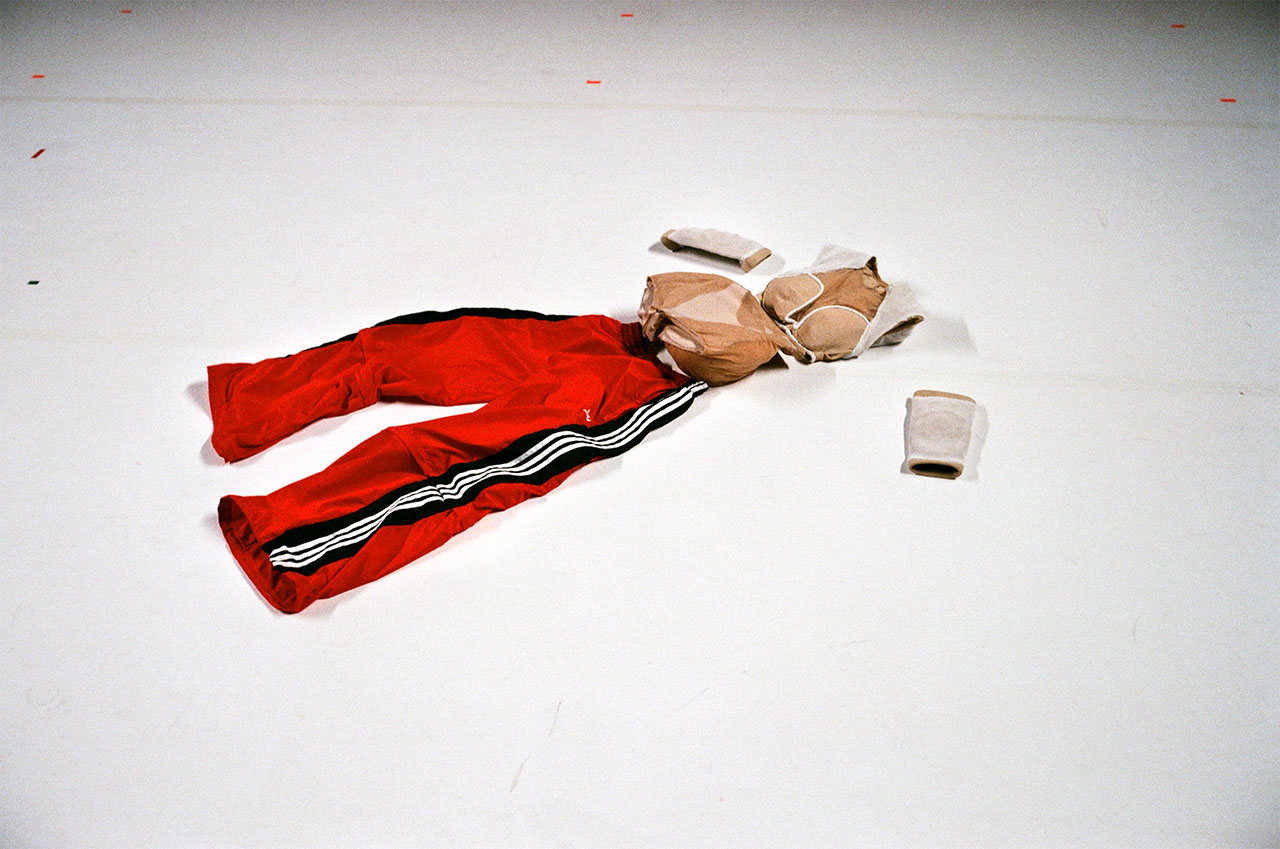
Maxime Ballesteros on Contemporary Life
By Sebastián Sturla
The world today feels like a nightmare. Well, maybe something more like a fever dream.
AI has been shoved down everyone's throat, flooding the collective consciousness with grotesque interpretations of real media. If you’re lucky, scrolling social media might offer a depressing headline or two… at least we know that's real.
Putting the phone down or closing the laptop- touching grass- offers some escape, but there are few places left untouched by this new normal we find ourselves in. Those of us in urban environments are no stranger to ads plastered across metro stations and bus stops for the latest dating app, crypto casino, or AI agent who actually really wants to be your friend and definitely won’t record your conversations (it even does roleplay!).
Humanity's digital ambitions have bled from the confines of our screens to the streets we walk. Advertisements, data centers, productivity-optimized work environments... The cold, profit-driven calculations of the ever-so-ominous "algorithm" have manifested themselves in our physical reality, squeezing their way into the air and water we survive on, the time we spend both working and leisurely, even our bedrooms.
Absurdity is no longer absurd. Virtual reality is now, virtually, reality.
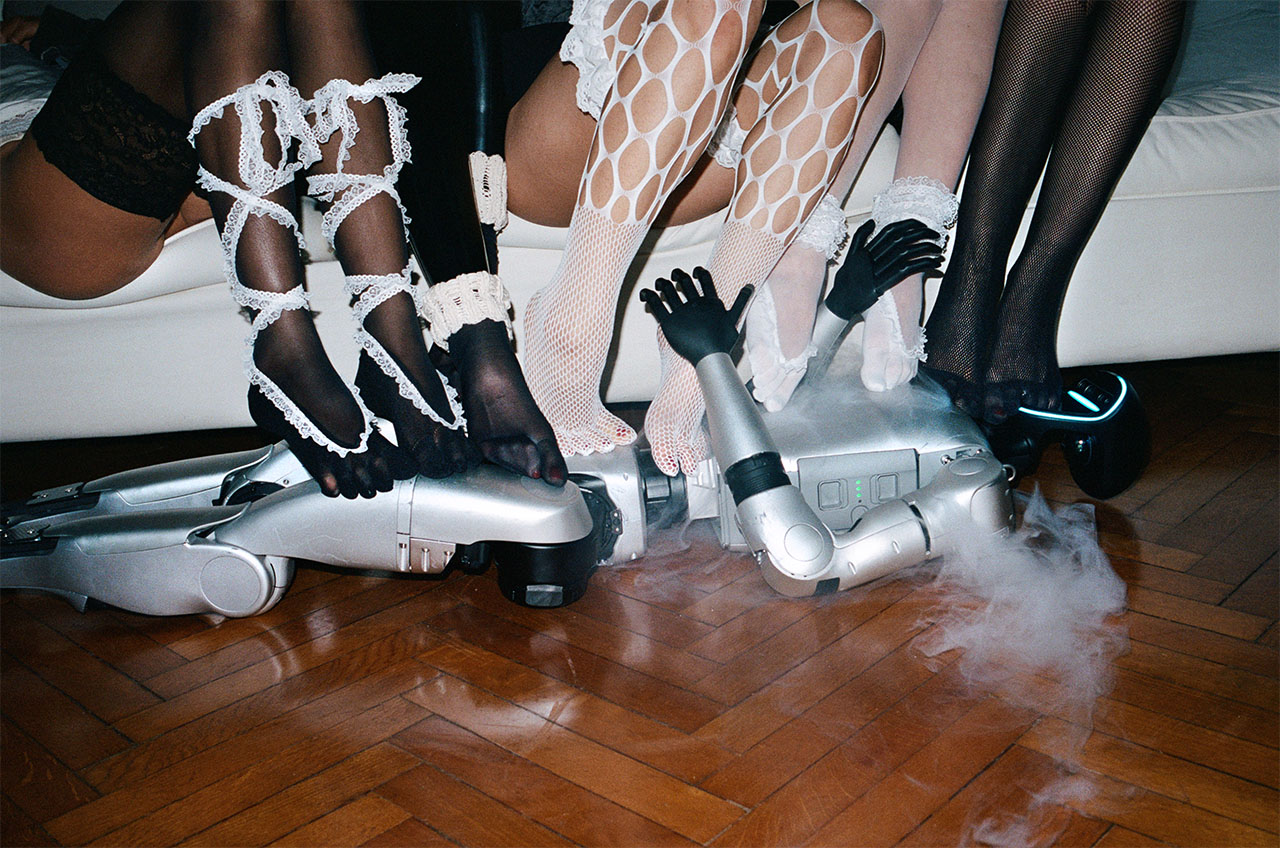
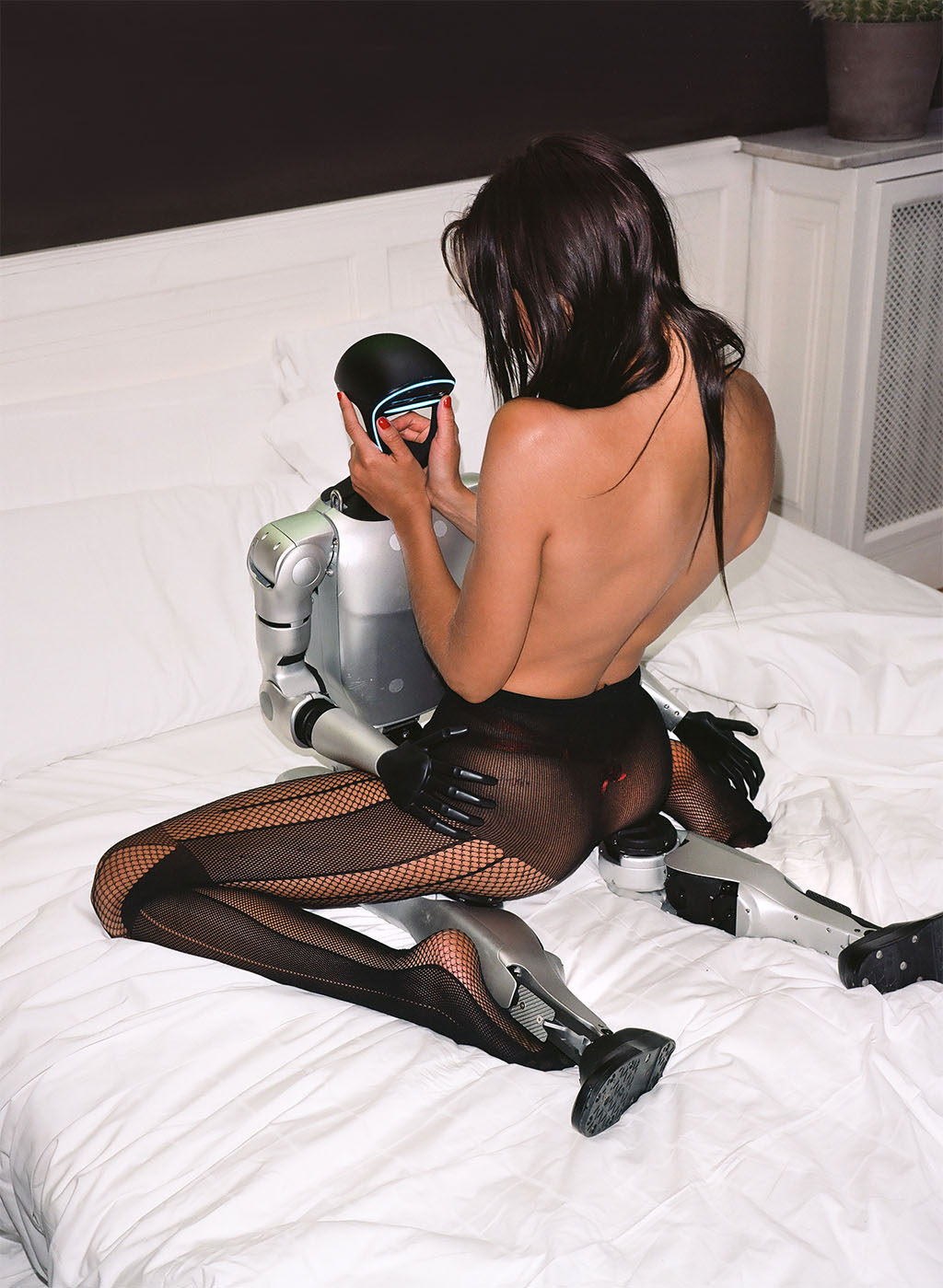
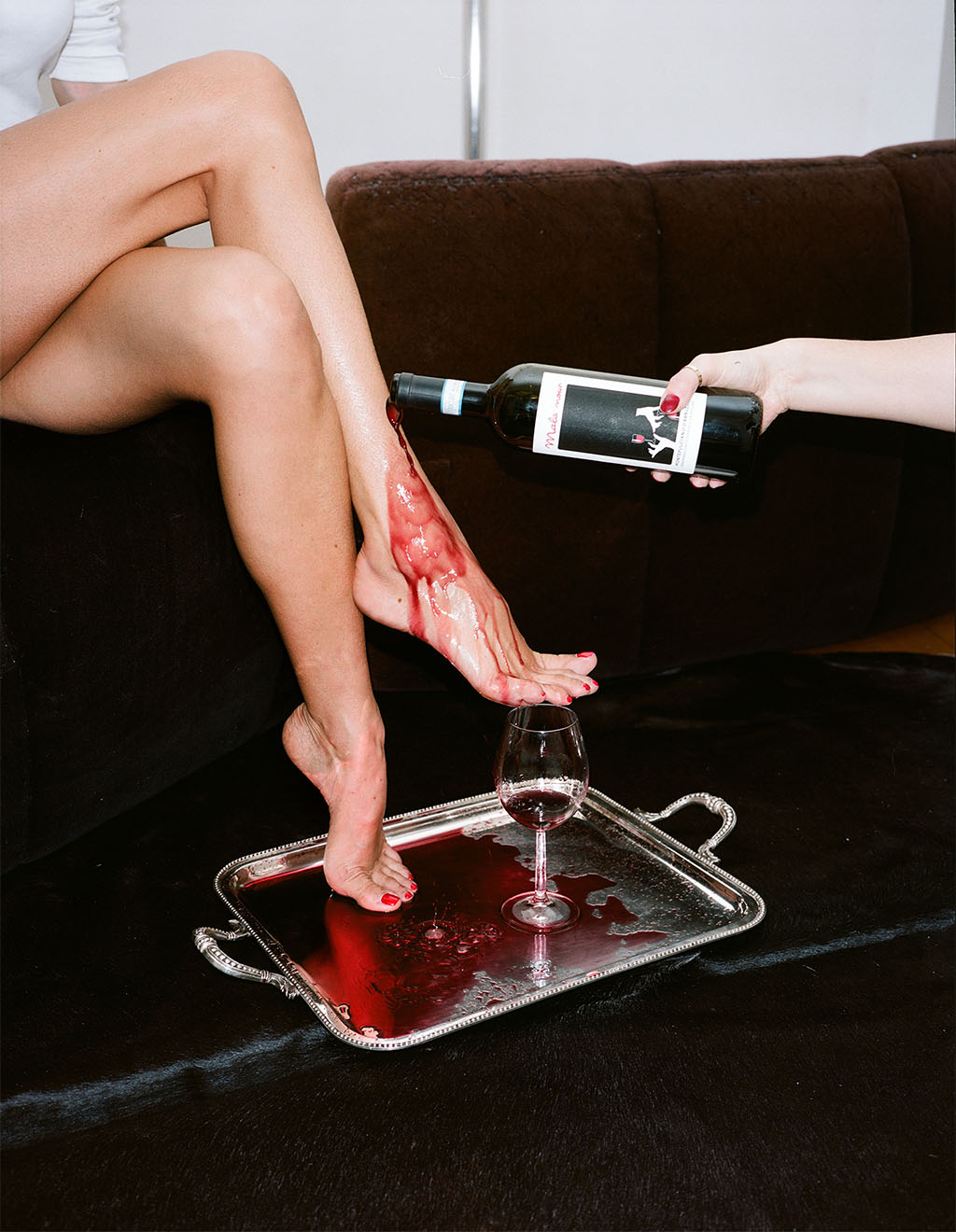
The work of photographer Maxime Ballesteros is perfectly timely. His photography captures the clash between the impending emptiness of a new digital age and the timeless taboo of carnal desire. The friction is so strong that you can nearly feel a burning sensation on your skin. It’s completely novel, scary, exciting, and super sexy... kind of like everything these days.
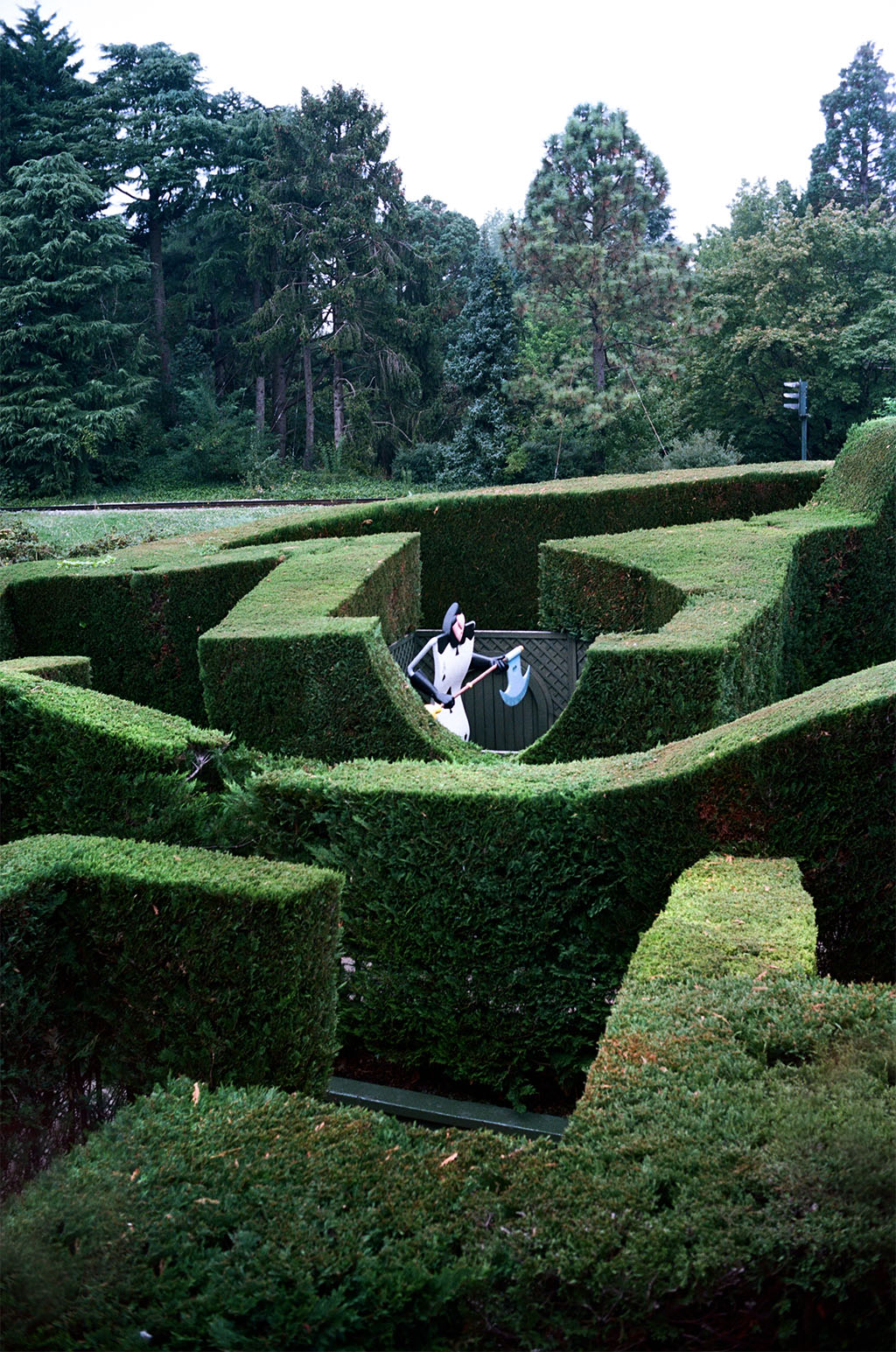
Looking past the 'fun' of it all. His images beg the question: Are we still in control? Perhaps we've lost our place at the top of the food chain; maybe the life we knew as the apex predator will soon be a distant memory.
Absurdity is no longer absurd. Virtual reality is now, virtually, reality.
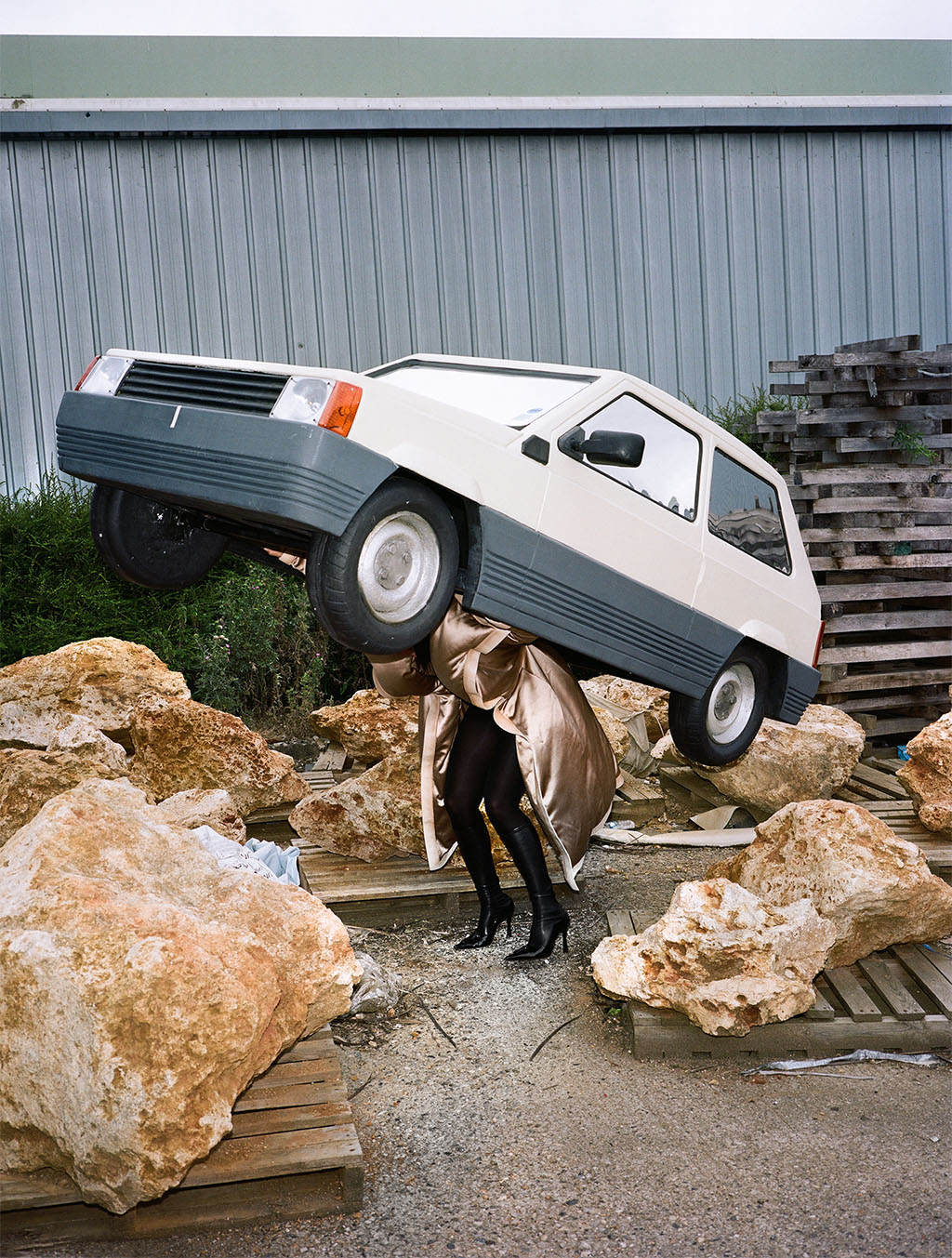
I spoke with Ballesteros about his work, why he's drawn to the uncanny, and where we are as a species right now.
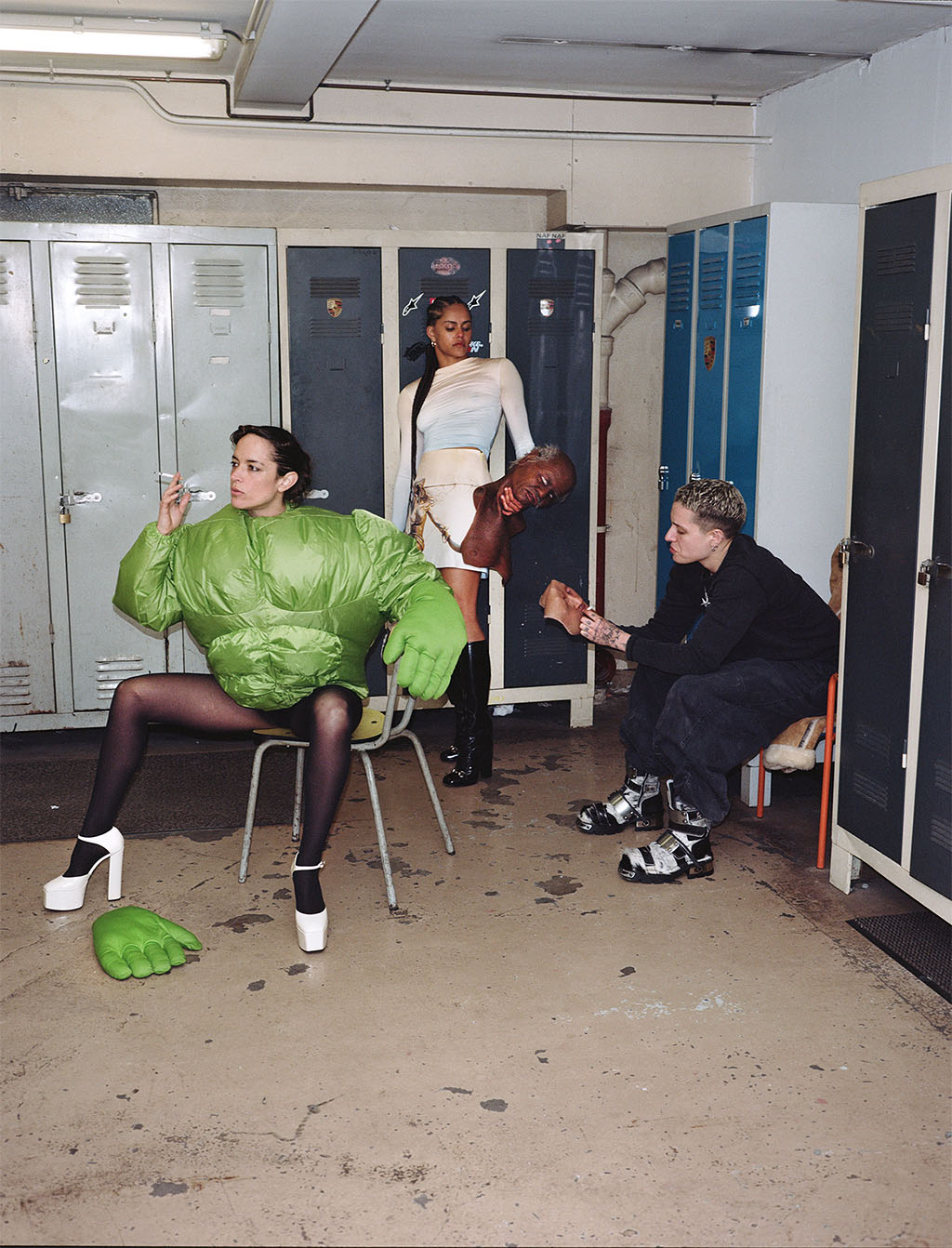
Tell us about the history of your work and where it is right now. How does it fit into the world around you?
My work has evolved over the years and grown in the way that it has been searching for symbioses, cracks, and glitches, often man-made, that were imprinted upon the time we live in. I realize that now, as I look back at the series I made decades ago. While the socio-political context has always been present in the background, I feel like I’ve consistently been drawn to individual stories, coexisting together.
Is there anything specific you’re trying to achieve with your art in 2026? What conversations or emotions do you hope to spark?
This year I’ve been working with a lot of performers and dancers. Working with people who use their bodies as a medium makes me think of the ways we are disconnecting from our own at this moment in time.
It feels as though we don’t really know how to listen to our bodies anymore, and we need all these technologies to replace gut instincts, eradicating more and more of our zone of discomfort. It’s a time where we don’t know how to make our own decisions, and everything is predetermined for us. How to dress, how to date, who to date, how to spend, and ultimately, how to think. In many ways, we’re disconnected from our bodies and no longer seem to know how to move with confidence anymore.
Maybe this is why I subconsciously shoot performers. Perhaps as a response to all of this, as if I’d like to postpone time to deny this becoming a reality.
I’d like to expand this to other fields like the music industry, for example.
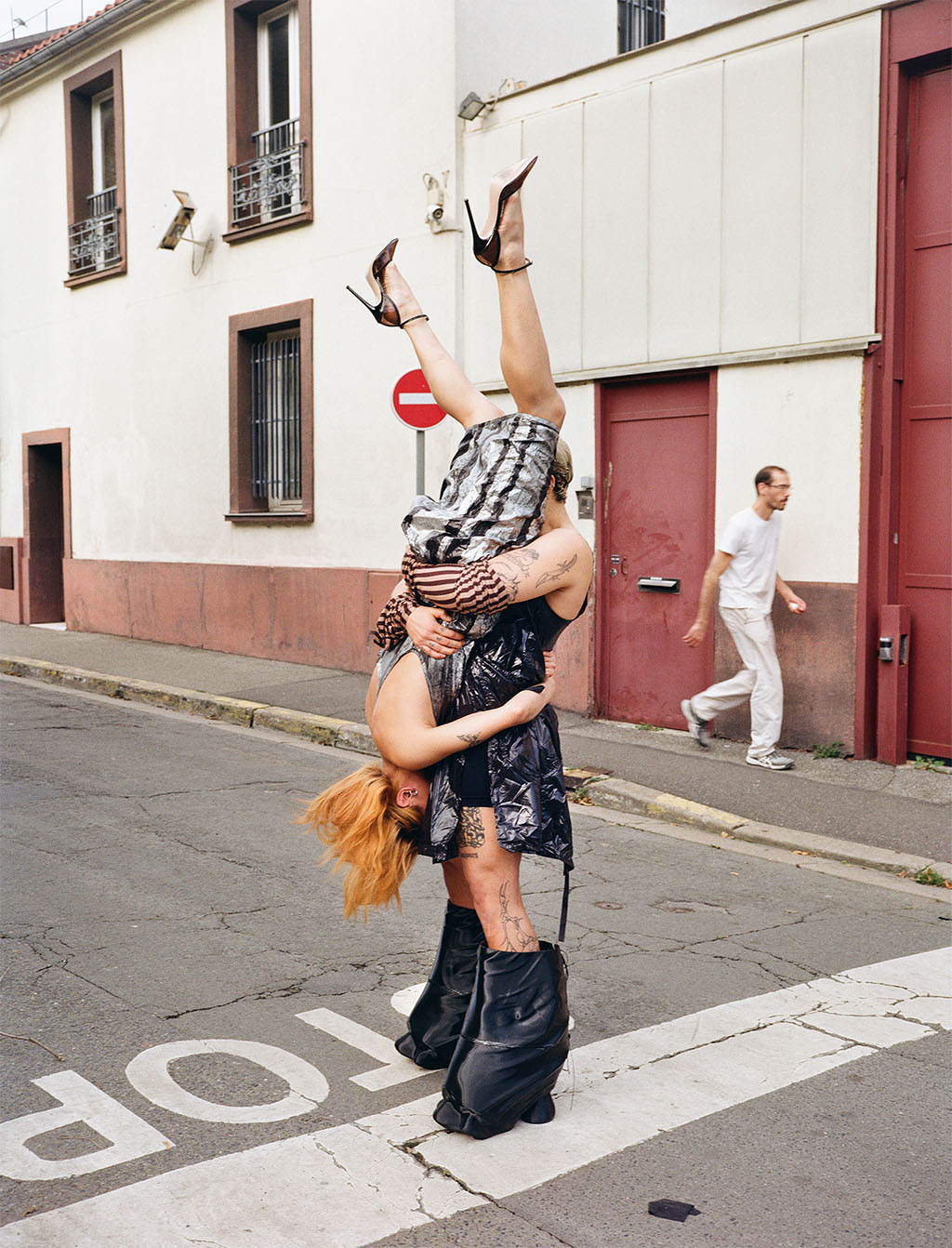
Your art has clearly brought value to people’s lives. Once it’s out in the world, what purpose do you see it serving? Have you ever witnessed your work taking on meanings or impacts far beyond your original intentions?
I’ve had a hard time recalling memories ever since I was a young teenager. My brain is incapable of retaining faces, places, stories - everything. It’s like it has wiped everything before I could even hold it. So I take pictures to remember. Ever since I was 15, it has been a very important practice for me and the main motivation to do what I do.
The other reason is as simple as to see. To make something exist. Not just for me but for the viewer as well. It helps me reflect, to think of things differently, to have a new point of view, to share that and let it tell its own story for someone else who might need it the way I did.
What does authenticity mean in other artists’ work today—and in your own? How do you measure it?
It refers to my previous answer, but I see more and more artists accomplishing pieces that most of us can cross-reference from the past almost immediately. Beautifully done sometimes, thanks to technology. But I’m not very impressed by this, as all I’m interested about is their voice, not a stunt, not how well you interpreted and executed a trend, but rather to express something that could be less spectacular but more sincere.
I say voice and not style, as I know artists that purposely change style, even medium, all the time while keeping their voice consistent. It’s never about appearances. And I think that’s how you measure one’s authenticity. I think these things take a while.
I see a lot of people pointing out that their work is so true to themselves, but when speaking to them, you realize that they don’t know who they are. So it doesn’t make much sense to me, and it reflects in their work.
However, this approach doesn’t function so well with the extremely fast-paced world we live in. It prevents most people from finding honesty. Faking it till you make it is apparently enough.
Pretending is way too important in today’s world. And don’t get me wrong, some people are amazing at it. The price we pay for that is the inability to find ourselves through the mistakes we make.
I feel contemporary culture does not reward taking your time to master your craft. So we see a lot of clickbait without much depth to it.
That being said, I’m always curious and go to as many openings as possible, and there has been some incredible work despite this.
I also think sometimes that this field has gotten oversaturated. What was once niche is now mainstream and attracts a much wider range of people. Which is fun, but the side effects of this are that influencers replace critics, brands buy opinions, and cancel culture prevents discussions.
What do you borrow from the past?
Capturing already existing people and things has always been an immense part of my practice. Moodboards are strictly forbidden when it comes to my personal work. I only use it if someone forces me to for a job. I do not like to sample and reinterpret ideas from others. Ever since I picked up a camera, I’ve had a tiny black pocket notebook that I carry everywhere with me, where I scribble and doodle all my ideas. I have dozens and dozens at home. Sometimes an idea wasn’t used, and I can use it for another shoot.
In my teens, I spent an incredible amount of time at the library; we didn’t own a TV at home. This is where I discovered all the masters of photography and art. Later on, when I was able to have my own computer, I began to spend an equally large amount of time on Tumblr and the darker, kinkier side of the internet to complete what I couldn’t find in books. Those were the uncensored times when you could find anything and everything without censorship or an algorithm to dictate your palette. Somewhere in my head, there is an archive, I suppose.
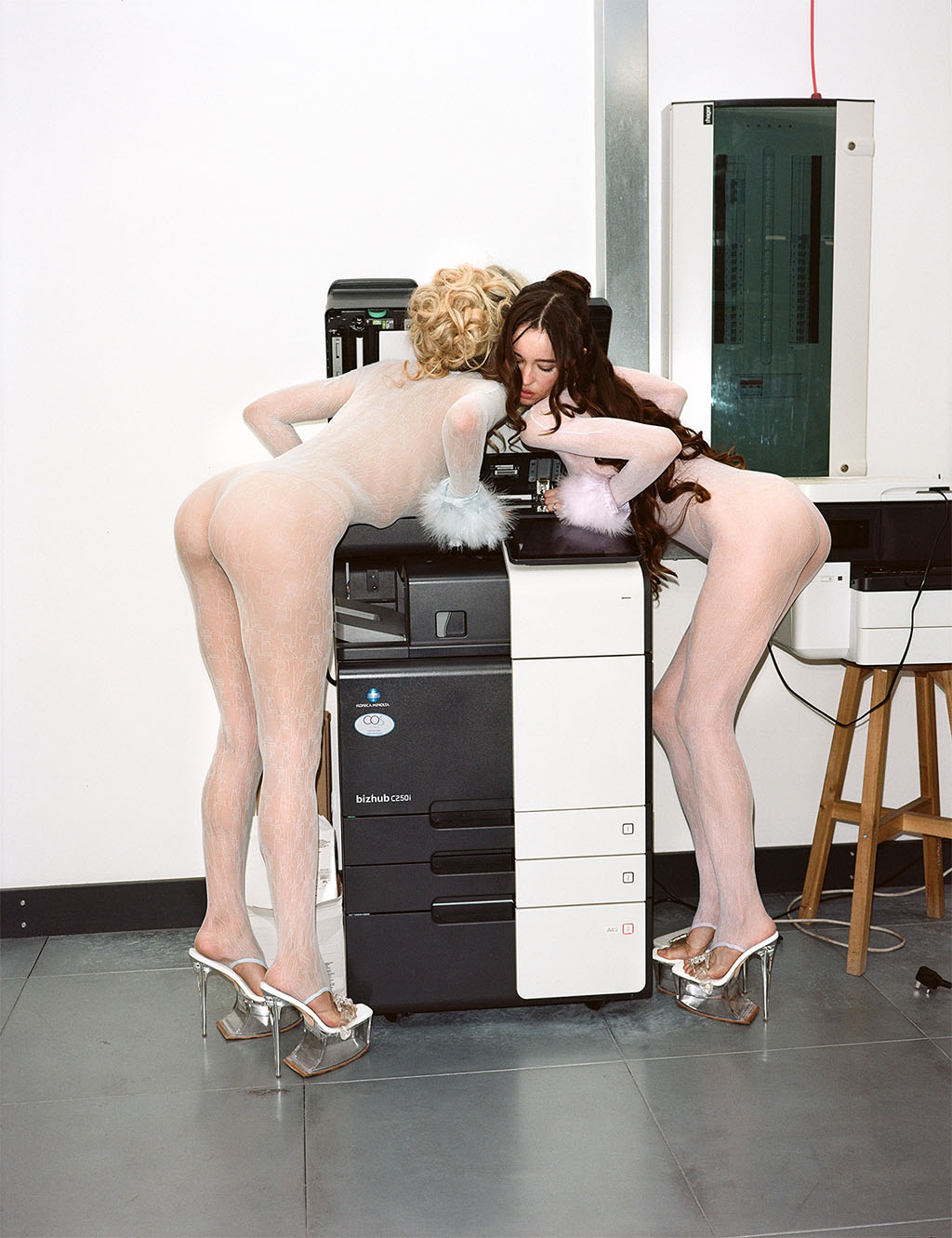
Tell us about your current influences and inspirations. What artists, movements, technologies, or everyday phenomena are feeding your practice this year?
My inspirations come primarily from people. I’ve been very careful my while carreer not to look much at contemporary photography, aside from all the masters I mentioned earlier. I’m very visual and don’t want to involuntarily pick up on specific ideas that were already shot.
Taking gorgeous pictures is extremely easy and can be done by pretty much anyone nowadays. The only thing that makes each of us unique is our voice, visual language, and choices that have been built over the years, until it becomes a body of work, its own vocabulary that is singular to each artist.
Who was your favourite artist or influence during your adolescent years, and how does that connect (or clash) with what moves you today?
Mainly William Klein, Mary Ellen Mark, Martin Paar, Sophie Calle, Antoine D’agata, Boris Mikhailov, Jeff Wall, Guy Bourdin, and Helmut Newton.
They resonate with me more than ever because I get a little bit overwhelmed with all the images we have today, and they are the anchors of something that we have lost. The world has changed so much in such a short period of time that their times feel further away. I still apply some of the techniques that I’ve learned from them in the hope that my work will age as well as theirs.
Describe where you work these days and how that environment shapes your process.
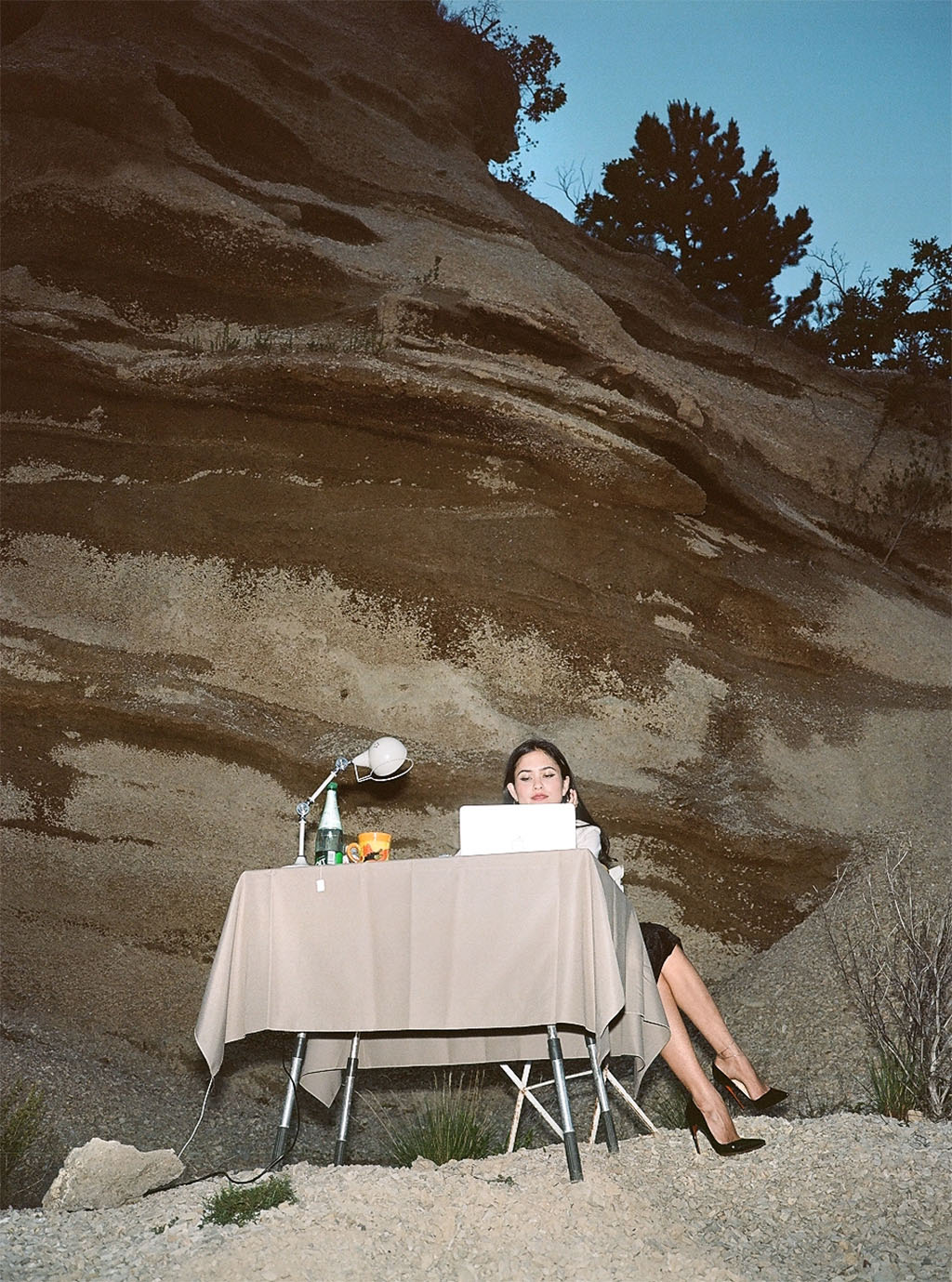
I work almost 100% outside and on location. I still have never shot in a studio - it’s not attractive to me. Environment is more important in my practice and something that I actively search for…
I often see myself as an active observer.
Is there any trend or artistic approach that you can’t stand right now?
Stealing from small artists. Taking someone’s brilliant idea and putting it on an influencer or celebrity and calling it yours while being applauded for being a fraud is truly heartbreaking. Now, anyone with a Pinterest board is a creative director. It’s not really a trend but a phenomenon.
Trends are more and more meaningless in the sense that they're born and die quicker than I can brush my teeth. So we shouldn’t pay any attention to them aside from how it affects our socio-political climate. (i.e. tradwife, looksmaxxing, etc.)
Name a concerning political/cultural phenomenon in 2026, and why does it affect you?
The rise of conservatism, and I’m not only talking about the rise of the far right, but also in a general sense, where there seems to be a rise in moral policing. People get their life experience off doomscrolling and think they have the right to police, lecture, cancel, and point fingers at anyone who doesn’t agree or have the same algorithms they do.
They think they’ve figured out how to crack the code instead of realising they’re being played like the rest of us. But more than that, it’s how we have criminals in positions of power and how they make laws with giant corporations and the 1% that is divide and conquering, making our lives miserable, all for profit and ego.
Have AI tools changed (or not) the way you think about creativity, authorship, and the value of the human hand?
In the art world, I think it’s just a tool. Like photography was said to be evil and would destroy painting. I don’t think it has been the case. Unless it’s being used to come up with concepts and ideas. In that case, it would turn our brains into mush. I never use AI, not ChatGPT, Claude, or whatever you have there. Some people have doubted my work and claimed it to be AI-generated.
The photos I have done with performers, for example, have taken years of practice to develop the skills to execute from all parties, and to have this be accused of being fake is really upsetting. I’m never going to give up, though. I don’t know how long we have before the human touch becomes just a fond old memory.
How conscious are you of the environmental impact of your materials and processes?
I try to avoid buying anything new. My laptop is still from 2013, and I plan to use it until it dies. My motorcycle is from 1992, car from 2006. I’ve cycled everywhere all my life. I don’t even take the metro. I don’t use AI, ever. I only go to thrift stores or use Vinted. I don’t buy from big brands and try to grocery shop local produce and avoid processed foods. These are habits I thought made sense; it’s not a political statement. It’s upsetting for me to witness people perform sustainability while driving a Tesla and renewing their phone subscription to get the latest iPhone every year.
There is an incredible amount of greenwashing in the market just for people to rid of their guilt to be able to maintain their addiction to consumerism. It also ends up forcing us to consume more by replacing what we already have to buy what is sold as eco-friendly, creating more clutter we don’t need. I doubt anything is sustainable if we do not change our relationship with the objects in our lives. We don’t need that much. You don’t need to take your car to go to the air-conditioned treadmill when you can just go outside for free.